
Your benefits at a glance
- The weight per unit area of the filter material is usually between 350 - 450 g/m²
- Large dimensions of the filter bags (diameter up to 300 mm, length up to 12,000 mm)
- Gentle, efficient cleaning mechanism
- Almost continuous filtration operation
- Low compressed air requirements
- Longer service life
- For high exhaust gas volumes
- Cost efficiency
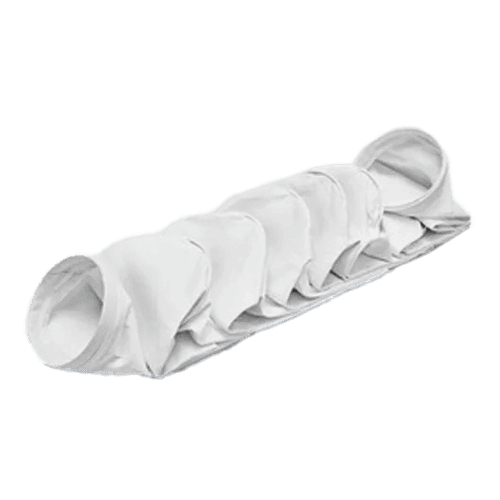
Reverse air filter bags
RABH Filters
BWF Envirotec offers you an extensive range of filter bags for Reverse Air Filters. Our Reverse Air Filter Bags are designed to meet a wide range of requirements. We are committed to keeping your baghouse running, and ensure the ideal interaction between the filter system and filter bag. Our filter bags for Reverse Air Filters set new standards by not only meeting the highest quality standards, but even exceeding them.
We examine all the requirements of your dedusting process and develop filter bags that are perfectly tailored to your needs. With our many years of experience in the industry, we not only ensure optimum performance, but also a sustainable service life for your baghouses. We take care of your concerns. From professional installation and necessary maintenance work to special training courses, we offer comprehensive services.
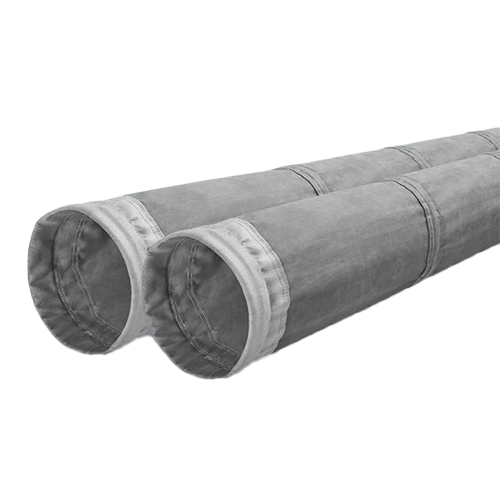
RABH Reverse Air Filters
effective cleaning of dust-laden filter media
High-quality RABH Reverse Air Filters from BWF Envirotec
The design of our Reverse Air Filter Bags differs from conventional filter bags as they work in a different way. Filter bags for Reverse Air Filters must therefore also be mounted differently. A special holder is sewn into the closed upper end of the filter bag to attach the reverse filter. The filter bag is mounted to the baghouse using this bracket. The open lower end of the Reverse Air Filter is connected airtight to the head plate of the baghouse. In filtration mode, the dust-laden gas enters the reverse filter from below. On its way upwards, the gas flows outwards through the fine filter, depositing the dust on the inside of the filter bag. When filtration is running, a filter cake forms on the inside of the filter bag over time. To remove this dust from the surface of the reverse filter and maintain filter efficiency, a backwash is carried out periodically.
To clean the filter cake, the chamber of Reverse Air Filters is temporarily disconnected from filtration operation (off-line). Only then does a backwash fan, which is installed outside or directly in the Reverse Air Filter on the clean gas side, create a counterflow that causes the filter bag to partially collapse. To prevent the Reverse Air Filter from collapsing completely, support rings are sewn into the circumference of the Reverse Air Filter at defined intervals. These give the filter bag stability. Backwashing is carried out with clean air from the clean gas side. The counterflow removes the accumulated filter cake from the filter surface. During this cleaning process, the main flow can continue to pass through the filter so that the production process can continue uninterrupted.
In addition to reversing the air flow, many Reverse Filters also use compressed air. Compressed air is blown through special nozzles or valves in short, powerful bursts. These blasts of compressed air can detach dust particles from the filter media. The overlapping of the backwash fan by pulsation improves the efficiency of the cleaning mechanism and thus enables more thorough removal of contamination from the Reverse Air Filter.
When filter bags for Reverse Air Filters are cleaned, the accumulated filter cake breaks up and collapses. The falling dust from above causes a kind of chain reaction that sets off an avalanche of dust (avalanche effect). Particles that adhere to the surface of the filter bag are detached by this dust accumulation and pulled downwards. The reversed air flow combined with the force of gravity causes the particles to be directed into the collection container. The cleaned Reverse Filters return to their original state, ready for a new filtration cycle. The chamber then returns to filtration mode (on-line) and the backwash fan is switched off. The now purified air flow can then be released into the atmosphere. This cleaning process enables almost continuous filtration and maintains the efficiency of the filter system.